
What is the brain doing before we move?
We follow the final seconds before an action to see how attention, brain rhythms, and the body prepare together.
We measure what the brain and body do in the seconds before skilled action — and test whether that state can be trained and carried back into sport.
Dr. Ming-Yang Cheng · Associate Research Fellow, Taiwan Institute of Sports Science · Founder, SPIN Lab
Explore the research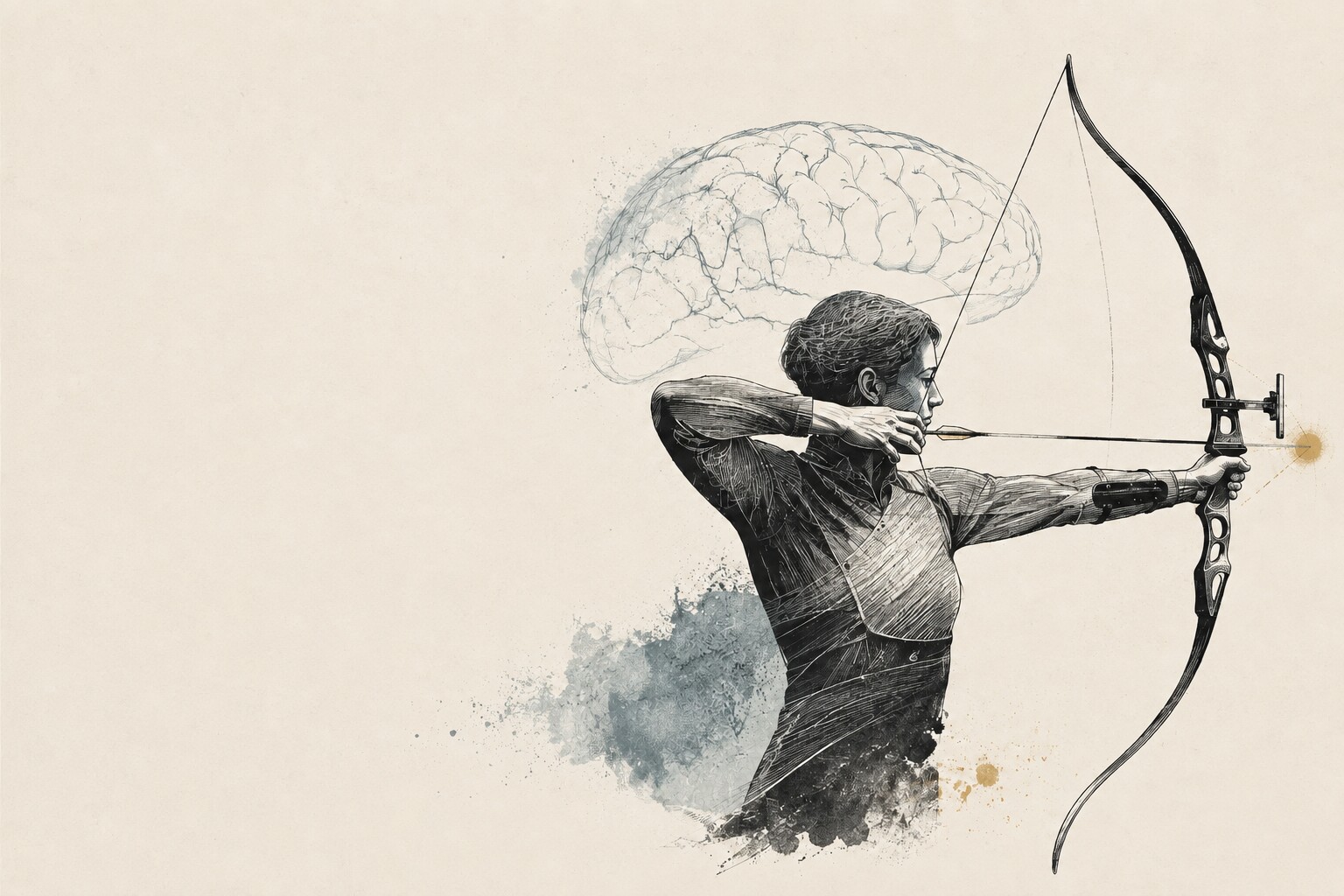
Associate Research Fellow · TISS
Attention · physiology · neural readiness
SPIN Lab
Publications · athletes · public knowledge
We follow the final seconds before an action to see how attention, brain rhythms, and the body prepare together.
Pressure can shift attention, breathing, heart rhythm, and movement preparation before technique appears to change.
We ask who responds to neurofeedback, how much practice helps, and whether learning carries into sport.
Record brain and body signals before a sport-specific action.
View the method →Turn research-based EEG and HRV markers into individual feedback practice.
View the method →Remove the feedback and test what still works in sport.
View the method →Peer-reviewed · 2023
Performance quality is associated with differences in pre-action cortical organisation.
Psychology of Sport and Exercise · DOI ↗
Peer-reviewed · 2026
Reward and punishment are associated with distinct neurocognitive and autonomic patterns during shooting.
Scandinavian Journal of Medicine & Science in Sports · DOI ↗
Review · 2024
Evaluating EEG neurofeedback in sport psychology: a systematic review of RCT studies for insights into mechanisms and performance improvement
Frontiers in Psychology · DOI ↗
SPIN Lab combines individual measurement, feedback practice and sport-specific testing.
SPIN Lab →With athletes and coaches, research findings become concrete changes in training.
View field application →Athletes, parents and coaches: start with your sport and the question you are facing.
An Asian Games athlete shares his experience of EEG assessment and personalised feedback.
Explore the field note and athlete’s storyCheng leads two active NSTC projects and one active TISS project, and co-leads the active TISS automated EEG analysis project. A further TISS badminton mental-capacity assessment project is approved, with Cheng as co-principal investigator.
View funded projects →The study connects motivational stress with coordinated neurocognitive, autonomic, and performance changes before action.
Open the publication ↗A live EEG demonstration let participants observe the feedback loop and discuss how recordings relate to practice.
Read the event record →Articles, podcasts and talks that explain attention and pressure research in plain language.
Brainfield →